Do Car Air Purifiers Really Work and Which Ones Are Best?
With rising concerns over air quality — both outdoors and indoors — many people have begun paying closer attention to the air they breathe in confined spaces. One place that often goes overlooked is the car. Whether you're commuting daily, stuck in traffic, or embarking on a road trip, the air inside your vehicle can quickly become stale or even polluted. That’s where car air purifiers come in.
But do these compact devices actually improve the air inside your vehicle? And if so, how do you choose the best car air purifiers from the many options on the market? This article explores how they work, what they can realistically do, and how to make an informed choice based on your needs.
Understanding the Problem: Why Air Quality Matters Inside Your Car
It’s easy to assume that rolling up your windows protects you from outdoor pollution, but the reality is more complex. Vehicles are far from airtight. Air — and with it, pollutants — constantly enters through ventilation systems, open windows, or even gaps in the car body. In urban areas, the air outside your vehicle may contain particulate matter (PM2.5 and PM10), exhaust fumes, pollen, and other harmful substances.
Inside, the issue doesn't stop there. Dust, mold spores, off-gassing from car materials, and even pet dander can accumulate over time. All of these can negatively impact respiratory health, especially for individuals with allergies, asthma, or other sensitivities. That’s where air purification systems specifically designed for vehicles become a potential solution.
How Do Car Air Purifiers Work?
Car air purifiers work on similar principles as their home-based counterparts, albeit scaled down for a smaller environment. Most models are powered through a USB port or 12V outlet and use one or more of the following technologies:
-
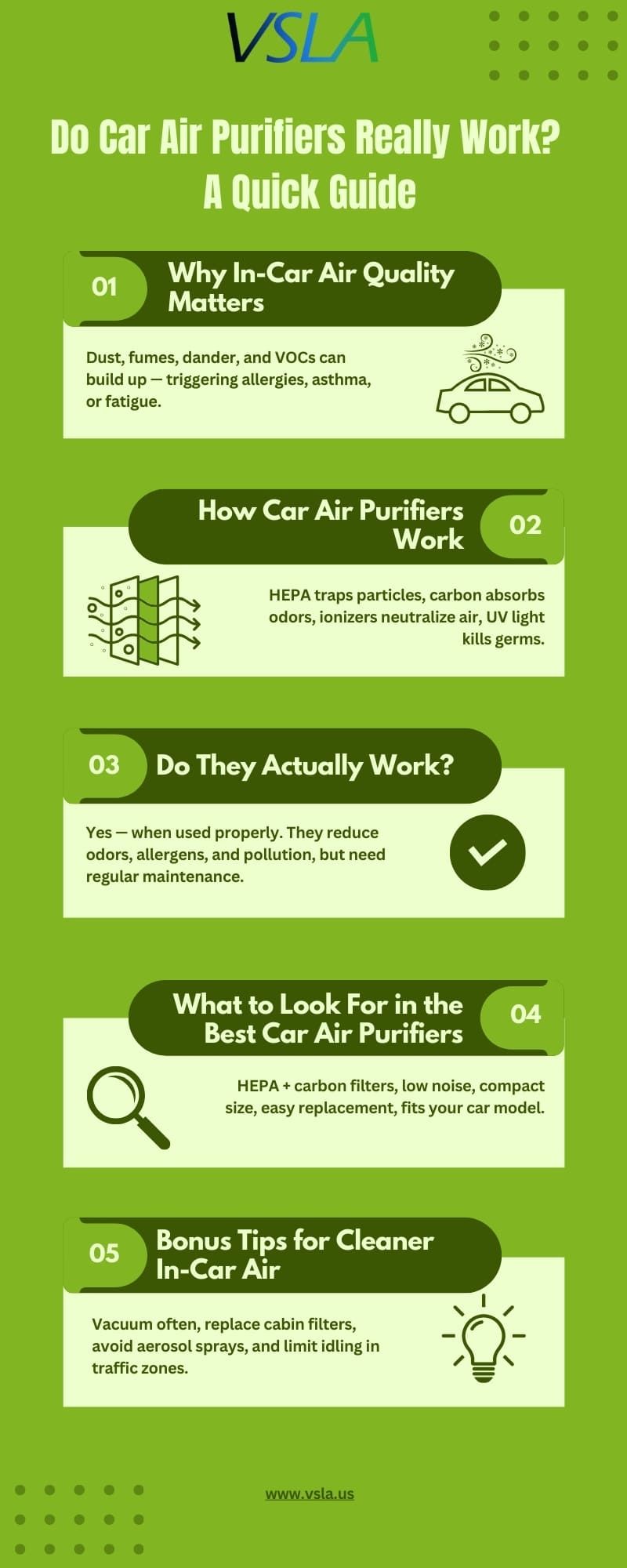
HEPA Filters (High-Efficiency Particulate Air): These can capture up to 99.97% of airborne particles as small as 0.3 microns. They're excellent for removing dust, pollen, and certain types of bacteria.
-
Activated Carbon Filters: These are great for absorbing odors, smoke, and volatile organic compounds (VOCs) — which are commonly emitted by car upholstery and cleaning products.
-
Ionizers (Negative Ion Generators): Ionizers release charged particles that bind with airborne contaminants, causing them to fall to the ground. While effective to some extent, they are best used in conjunction with filters, as they don’t actually remove the particles from the environment.
-
UV Light Sterilization: A few advanced models also use UV-C light to neutralize microorganisms. This feature adds an extra layer of germicidal protection, although it's not universally available in all units.
Understanding these mechanisms can help you evaluate which device might best suit your driving habits and health priorities.
Do Car Air Purifiers Actually Work?
The short answer is: yes, but with some important caveats. Most reputable models on the market do improve the air quality inside a vehicle, especially if they use a true HEPA filter and activated carbon. These can noticeably reduce allergens, smoke, odors, and airborne particles within a short amount of time.
That said, expectations need to be realistic. A car air purifier won’t create a laboratory-grade clean room. Its effectiveness also depends on factors such as the size of your vehicle, how often the windows are opened, the presence of pets or smokers, and the level of pollution in your driving area.
In other words, while you may not feel a dramatic change immediately, over time the benefits of improved air filtration — fewer allergens, less odor, reduced respiratory irritation — can make a tangible difference, particularly for those sensitive to air quality.
Features to Look for in the Best Car Air Purifiers
When comparing models to find the best car air purifiers, several features are worth considering:
-
Filter Type and Replacement Frequency: HEPA and activated carbon filters are generally preferred. Make sure replacement filters are easy to find and not too expensive.
-
Coverage Area: Check if the purifier is rated for the size of your vehicle — compact cars, SUVs, or trucks may each require different performance levels.
-
Noise Levels: Since the purifier runs inside a small, enclosed space, a quiet motor is ideal. Most quality purifiers list their decibel levels in the product specs.
-
Power Source and Mounting Options: Some purifiers sit in the cup holder, while others can be mounted on the dashboard or clipped to vents. Choose one that’s compatible with your car layout and power availability.
-
Additional Functions: Features like automatic air quality sensors, USB charging ports, or essential oil diffusers may add convenience and value, depending on your preferences.
Comparing Top-Rated Models
When researching the best car air purifiers, several brands and models consistently receive high marks from users and reviewers alike. These often include models with multi-stage filtration, compact design, and reliable performance in real-world driving conditions.
Some units specialize in odor elimination, while others focus on allergen removal or microbial reduction. Hybrid models that combine multiple technologies (like HEPA filtration with ionization) are becoming increasingly popular for their balanced approach to purification.
Rather than relying solely on brand names or flashy features, it's best to match the purifier’s capabilities with your primary concerns — be it pet hair, cigarette smoke, or urban air pollution.
Alternatives and Complementary Practices
While a good air purifier can do much of the heavy lifting, it's even more effective when combined with good habits. Regularly cleaning your car’s interior, vacuuming fabric surfaces, replacing cabin air filters, and avoiding air fresheners that release VOCs all contribute to better in-car air quality.
Also, be mindful of idling in high-traffic areas or driving with windows open in dusty or pollen-heavy conditions. Air purifiers are helpful tools, but they’re not a license to neglect basic maintenance and awareness.
Environmental and Long-Term Benefits
Though often overlooked, cleaner air inside your vehicle can lead to more than just short-term comfort. Over time, reducing exposure to airborne irritants may lead to fewer respiratory issues, improved sleep quality after long commutes, and less dependence on allergy medications. Families with young children or elderly passengers may particularly appreciate this added layer of health protection.
As awareness of environmental health continues to grow, devices that improve personal air quality — including in vehicles — are likely to become a more common fixture. And as demand increases, the technology continues to evolve, offering even more efficient and affordable solutions.
So, do car air purifiers really work? The evidence suggests that they do — especially when selected thoughtfully and used consistently. While no device can eliminate all airborne contaminants, a quality purifier can significantly reduce many of the pollutants and irritants that accumulate inside your vehicle.
For those interested in exploring practical, tech-based solutions for improving everyday wellness on the road, researching and investing in the best car air purifiers is a good step forward.
If you’re not sure where to start, companies like VSLA offer guides and curated recommendations to help drivers make informed, confident choices.